Mnemosyne OS · Infinity Edition · v1.5
Your AI memory lives on your machine.
The memory that makes an AI know you, across sessions, projects and years. It lives on your machine, encrypted once you arm it. You decide which documents a model may read.
The lawyer questions her case files offline, under privilege.
No subscription. Your own API key, or credits when you need them.
-
Every access identifies itself
Even on your machine, a program that reads your memory identifies itself first.
-
Nothing is kept without you
A memory becomes permanent by your hand. No agent can write one from the network.
-
No account
No signup, no password, no mandatory server. You download and you launch.
-
The cloud is optional
The engine runs on your machine. With a local model you can unplug the cable and keep questioning your files.
The interface
What is inside, tool by tool.
Everyday tools, placed wherever you want on the board. They all read the same memory: yours.
-
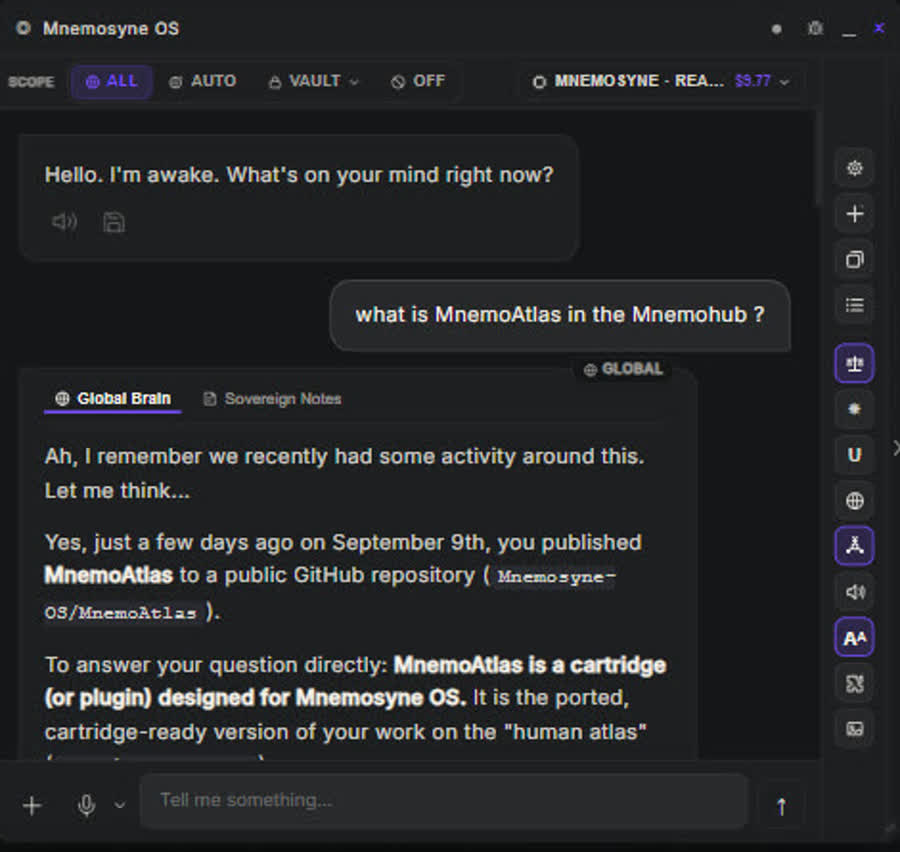
The chat that cites your files
Ask a question. The answer is written from your own documents and names the one it came from.
-
MCP: your memory for every agent
One open MCP server hands your agents the memory, the backlog, the calendar and the voice. Claude, Cursor and Hermes plug in the same way.
-
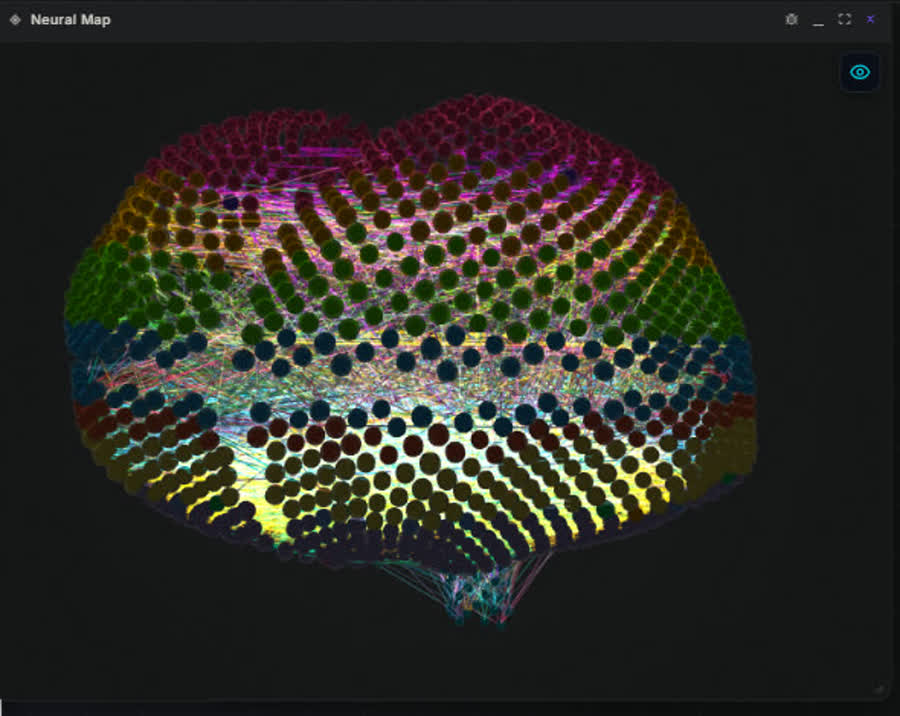
The neural map
Your memory drawn as a graph you move through. Every point is a memory, every link was measured.
-
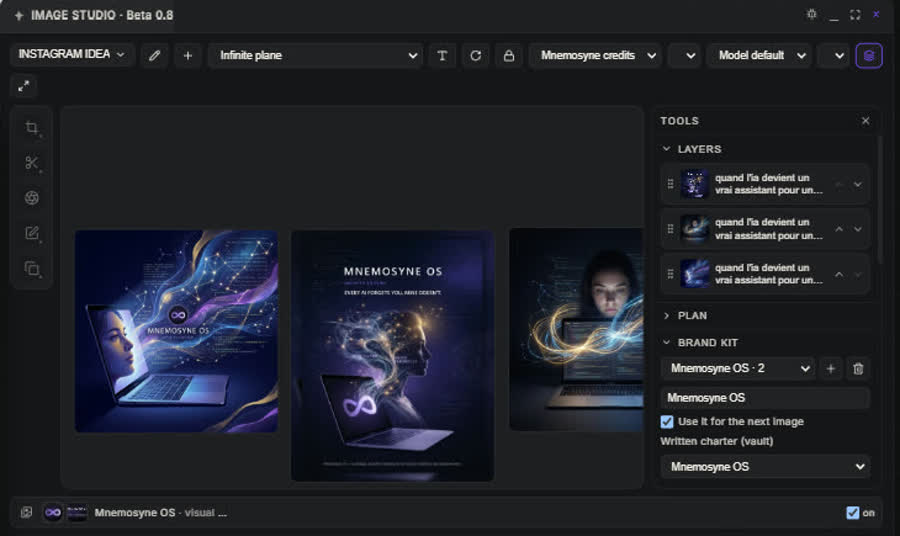
The image studio
Describe an image, retouch it, cut out a background. On your machine, or through a cloud key.
-
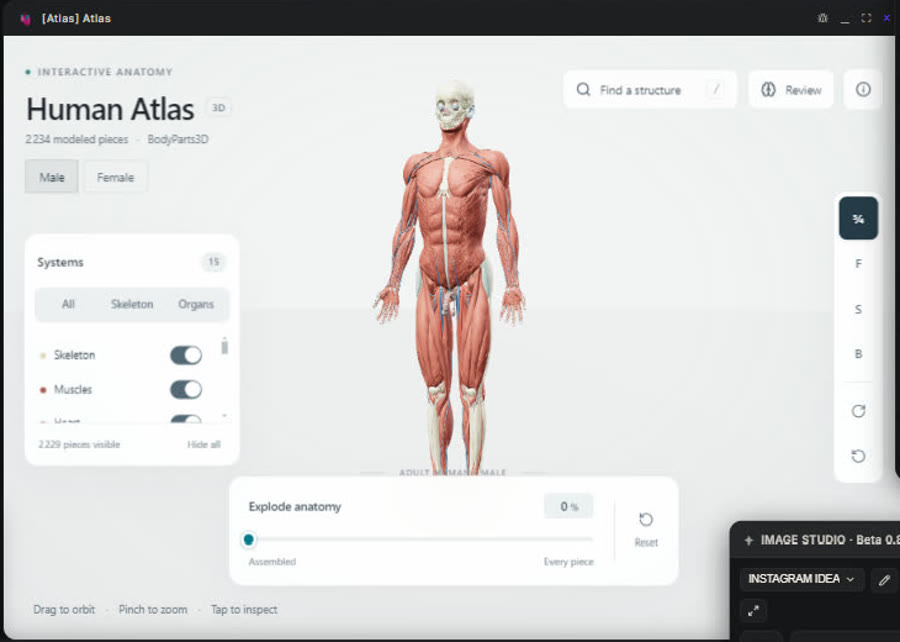
Cartridges
Apps that live inside the OS and read your memory. An anatomy atlas, a translator, a recipe book.
-
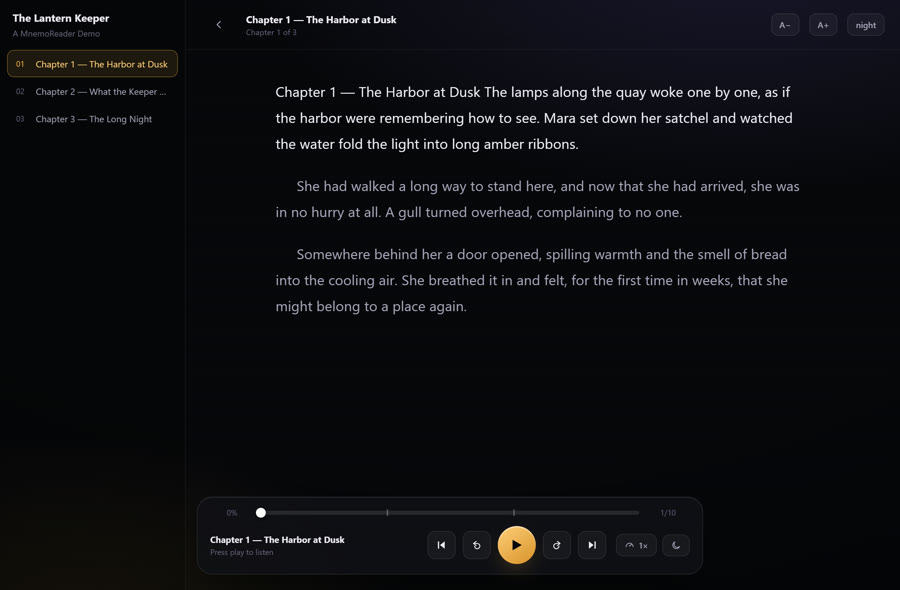
The document reader
Drop a PDF, an EPUB, a Word file. It becomes a library that reads itself to you, one word at a time.
-
MnemoHermes: your assistant, named by youbeta
Call your assistant by its name in the app, or write to it on Telegram. It answers from your memory, typed or by voice note.
-
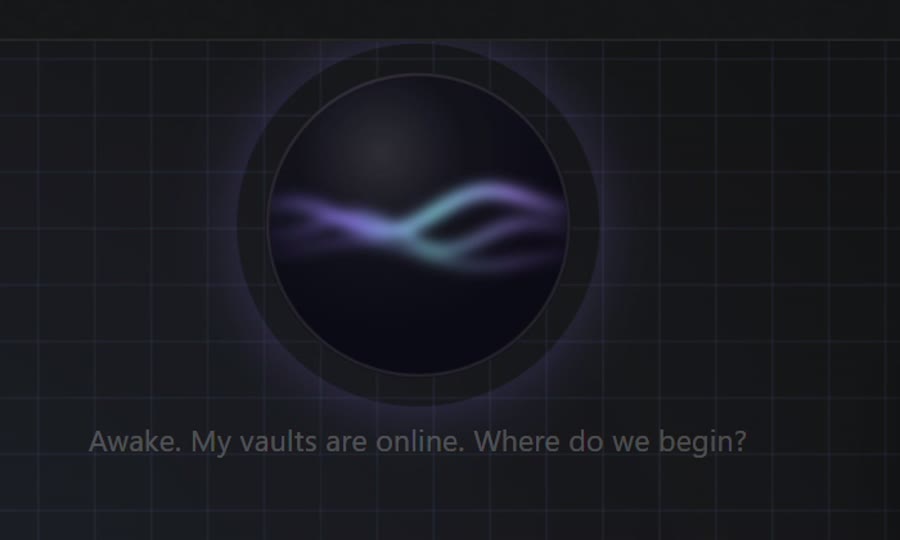
The voice
You talk to it, it answers out loud, and it can read your documents. The voice engines run locally.
Works with ElevenLabs
-
Together, peer to peerbeta
Share a vault read-only, or keep one together. Everyone holds their own copy, with no server in between.
The documentation covers every tool, step by step. Explore the documentation →
A developer? Point Mnemosyne OS at your repo. The architecture and the decisions enter memory. Ariadne tells you when two coding agents work on the same tree.
Or you build on it with the SDK, the MCP server or a cartridge. Each one serves a different job. Developers →
In three gestures
A vault, a folder, a question.
The vault is a file on your disk, the folder is watched, and the answer names the file it came from. No account, no cloud required.
- 01 A vault "+ New Vault". One per domain of your life.
- 02 A folder "Add a folder to watch…". A file dropped there enters memory, and again when it changes.
- 03 A question The answer is written from your files and names the one it came from.
A file lands in a watched folder.
It is cut into chronicles, and each one gets its own coordinates.
A question reaches the one that answers it.
Choosing your memory
Choose a memory on what you can check.
You will trust years of work to your memory. Check three things before you choose it: a score you can recompute, respect for your machine, and search that is accurate and fast. For us, all of it is measured and published.
LongMemEval-M · full-haystack
Full-haystack variant: ~480 noise sessions per question. Hybrid mode: local search, answers by a cloud model (gemini-3.8-flash). Protocol published before the run.
Unseen questions
77.1%
37/48 on a pre-registered holdout, official LongMemEval judge
Tuning questions
85.4%
41/48 on the questions used to tune the engine, strict judge
LongMemEval-S
—
The easy variant the industry uses. We measure the full one
Speed
An Intel Core Ultra 7 155H, processor only, no graphics card.
Write
0.10ms
p50 into the vault. The embedding before it is not counted
Vector recall
20ms
p50, top 10, warm cache, lexical channel off, 10,200 memories
Hybrid recall
108ms
What the chat actually runs: BM25 fused into the ranking
Go further
01
The manifesto
Why the relationship and not the intelligence. Identity, history, continuity, and why it is an OS.
Read →02
How it works
The local architecture, the four mechanisms, the nine core modules.
See →03
Developers
The open SDK, the sandbox covenant, the open-core. Build on it.
Build →Also: the roadmap · the team
Who it is for: students · teachers · chat with your documents · a local second brain
License
Free for you. 70 $ once for the license.
You download the full OS for free. The license and cloud credits are bought in the app.
Personal
0 $
- Free for any personal use
- The full OS, on your machine
- Your vaults, search, the neural map
- Vault encryption, when you turn it on
- Your API keys or your local models
- The system voice
Windows · macOS · Linux
Founder license
70 $ · one-time
- Everything above, for life
- Local neural voices
- The features and cartridges kept for licensees
- Your pseudonym reserved on Mnemosyne OS
- Paid once, no subscription
Bought in the app · by card
Enterprise
— on request
- Installed on your machines. Your documents stay there
- Cartridges built for your trades
- The memory engine inside your own tools
- Guided setup: vaults, rules, sources
- Seats for the whole team
- A direct line to the founder
Price on request · the founder replies
The principle
Memory perceives, situates and reveals.
The human governs.
It never deletes in silence. It never judges truth. It never mixes two domains of your life without you saying so. These three rules are written into the code.