The Neural Map
A dashboard for your AI's memory.
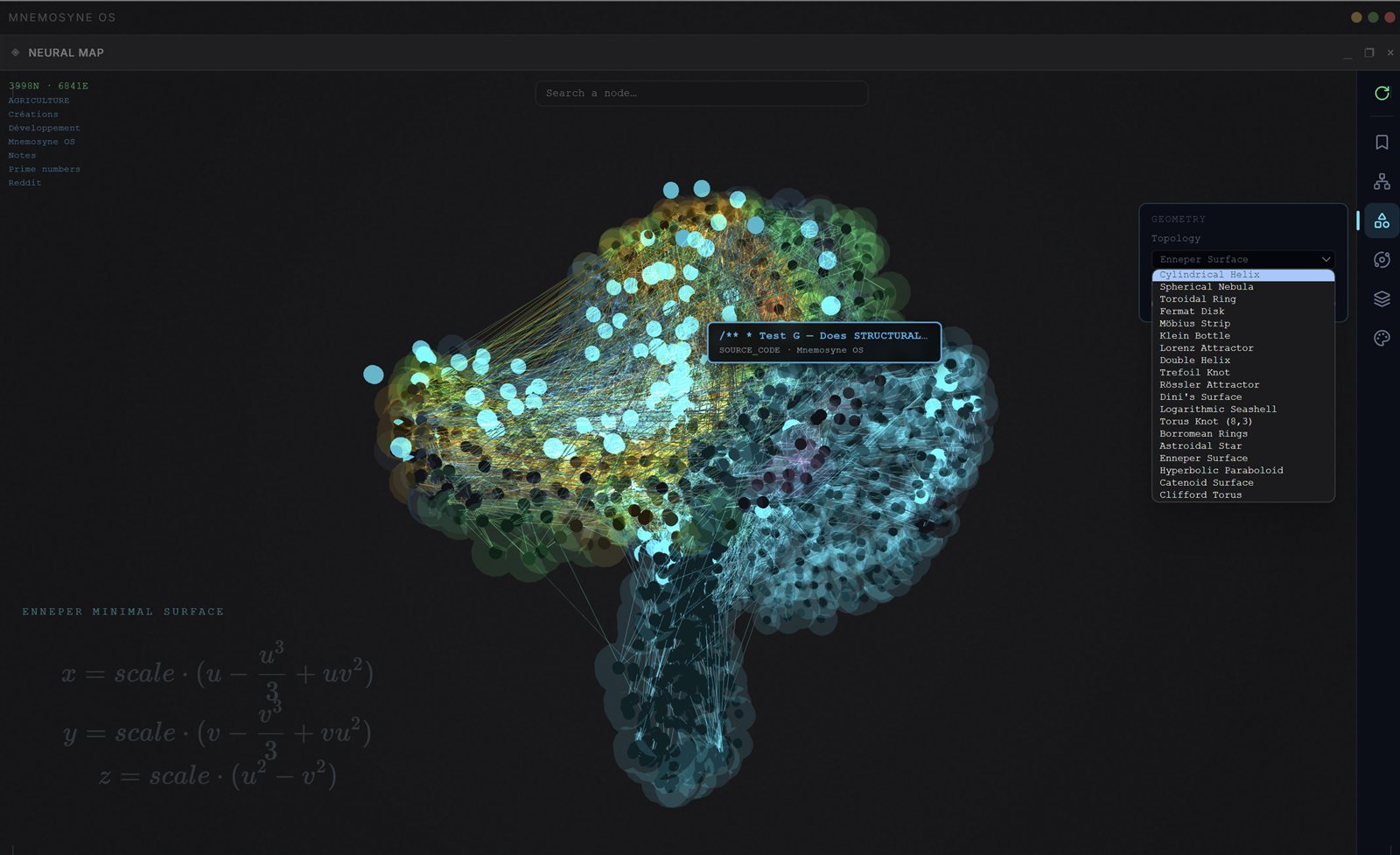
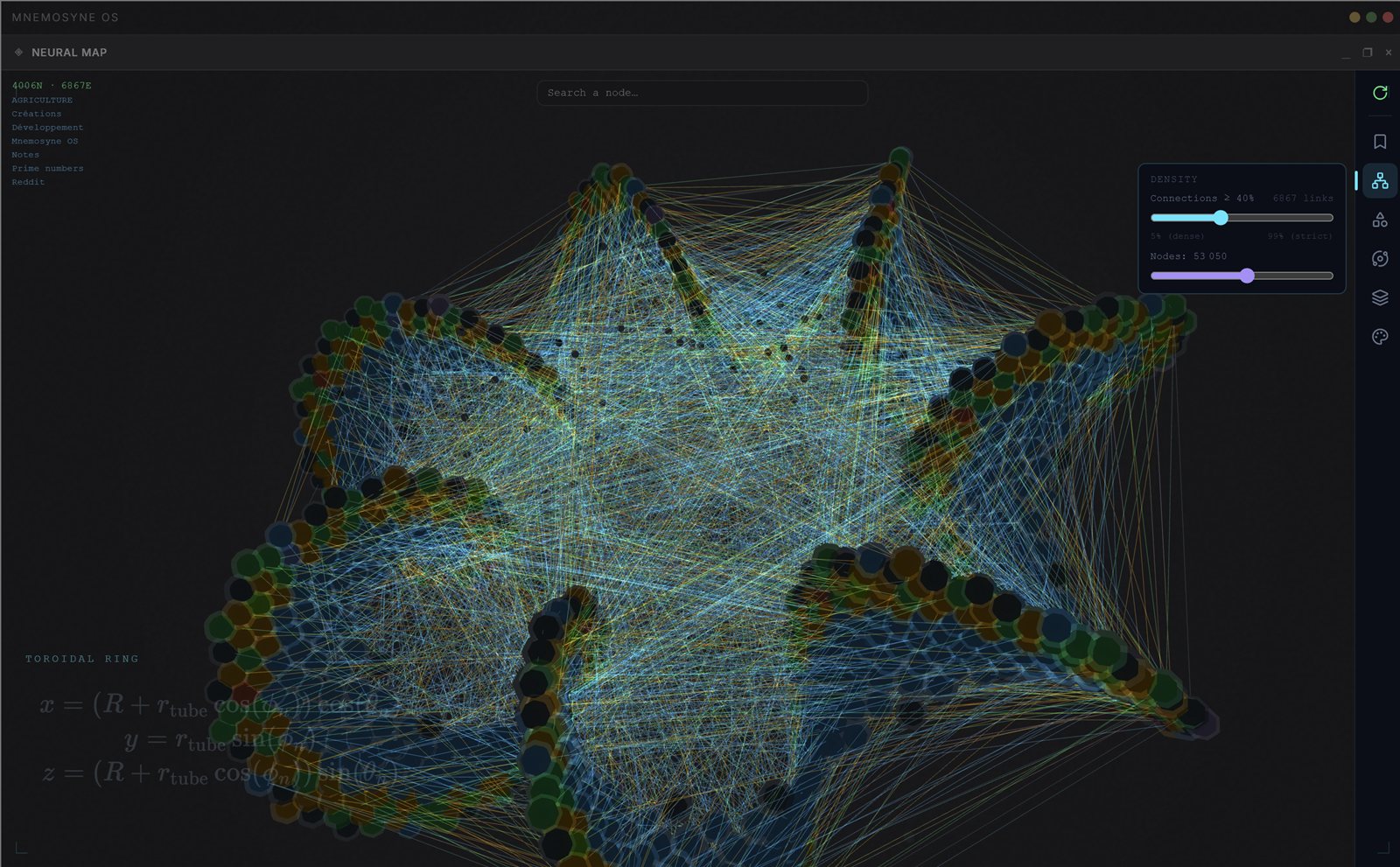
Most memory systems are black boxes: text goes in, you hope for the best. Mnemosyne OS makes every memory visible. Each node is a chronicle, each edge a measured link of meaning, each vault its own territory. You look at what your machine knows.
The shape of your memory
Your memories take shape.
The dashboard lays your chronicles out along measured topologies, not random springs that jitter on every render. Memories close in meaning become neighbors in space. A growing domain visibly grows. The shape of the map is information.
And you walk it: zoom into a neighborhood, open a chronicle, see what surrounds a thought. The note from two years ago sits somewhere, visibly, next to what resembles it.
Seeing is governing
A memory you can see is a memory you can govern.
An assistant that "remembers" things you cannot inspect is a liability. Here you audit what got in: open any node, read its content, decide whether it belongs. What should never have been ingested, you delete yourself. The system never deletes silently.
Governance needs eyes. The dashboard is the organ through which you stay sovereign over what your machine knows.
What it looks like
Memory, made visible.
Memory you can see
is memory you can trust.